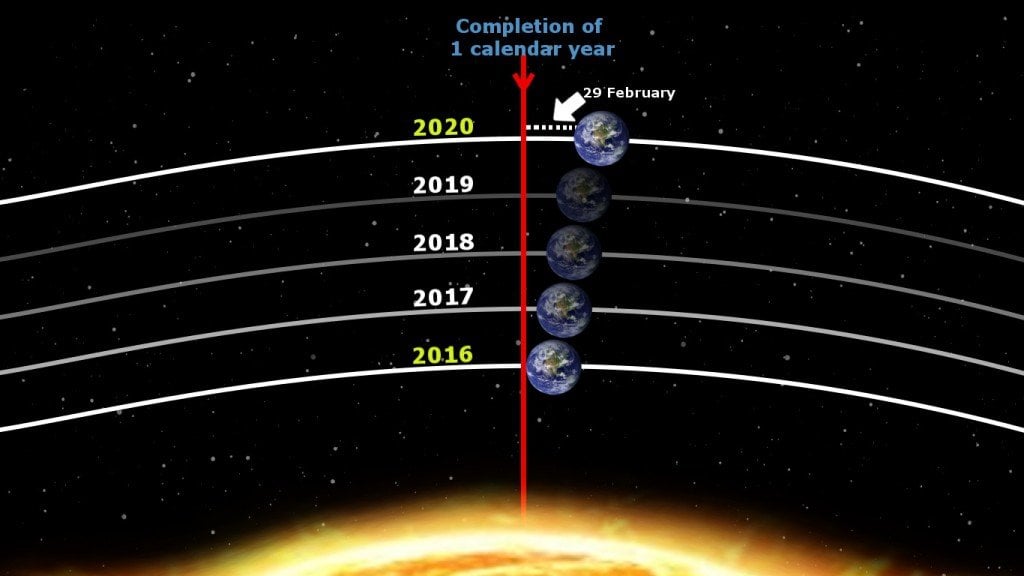
to Leap or not to

That’s a question, if not the question.

Happy Leap Day everyone!

By a fortunate coincidence (amazing how many of these keep turning up), the Leap Day occurs during theAbysmal 13-month Calendar’s Rabbit Year, which is determined by the glyph from the 260-day calendar that falls on the Dec 21 new year. Just so we’re clear, Dec 21 2023 was 12~VIII (Rabbit). Dec 21 2027 will be 3~VIII (Rabbit), 2031 will be 7~VIII, 2035 will be 11~VIII and so on.

The Leap Day is observed as part of theAbysmal Calendar’s Fixed and Scintillating Years (see All the Years for details). These calendars keep aligned with the Seasons, i.e. the Solstices and Equinoxes, and to do so, we observe this periodic Leap Day. With the Fixed Year, the Leap Day is a blank – it falls between the weeks, isn’t part of any month, doesn’t bear a colour, number, or glyph from the 260-day calendar. It’s a hoppy holiday. In the case of the Scintillating Calendar, a colour is assigned to the Leap Day, but none of the other measures. Today’s colour is green (East). This scheme is what lead to the 256-day calendar.

one rabbit leaping over another
Continue reading to Leap or not to

Leap Day 2020

Yeah, it’s a thing. It’s not a holiday. It’s not a celebration. It’s a mathematical fudging to keep the year kind of synchronized with the Seasons.

AFAIK, it’s the only calendar (the Gregorian/Julian) that observes the leap day anywhere other than the last day of the year.

IF February 29th were the last day of the year, then a few things would fall into place. March 1st would be the New Year. September, October, November, December, which literally mean 7th, 8th, 9th, 10th months, yet we number 9, 10, 11, 12, will actually align with their names.

It also makes it clear that the Gregorian Calendar is dedicated, at its foundation, to the Roman God of War, hence, it begins with March 1st, the month of Mars. January, named after Janus, is the two-faced god. I’ll leave you to draw your own conclusions.

also, the period of the leap day, 1 every 4 years, with exceptions 3 years out of every 400, isn’t as accurate as alternative schedules. 1 exception every 128 years is closer to the Tropical Year, and the Persian schedule is smoother.

There are an awful lot of time frames to choose from, so why do we choose this one which is so awful?

Dividing the Solar Year

A slice of the celestial pi.

The mean Tropical Year 365.24219 or 365.24217 days.

Mean Solar Crust

The solar calendars of the world organize the year into 365 days to approximate the Tropical Year. If it is important to keep the solar calendar in synch with the Tropical Year, then a leap day is added periodically.

The year is not a given, as there are various ways to measure and define the Earth’s orbit around the Sun relative to its rotation around its axis. If we use the ephemeris day, exactly 86,400 seconds, then the mean Tropical Year is 365.24219. If we use mean solar days, it works out to 365.24217.

Continue reading Dividing the Solar Year